Longmen Grottoes
Introduction
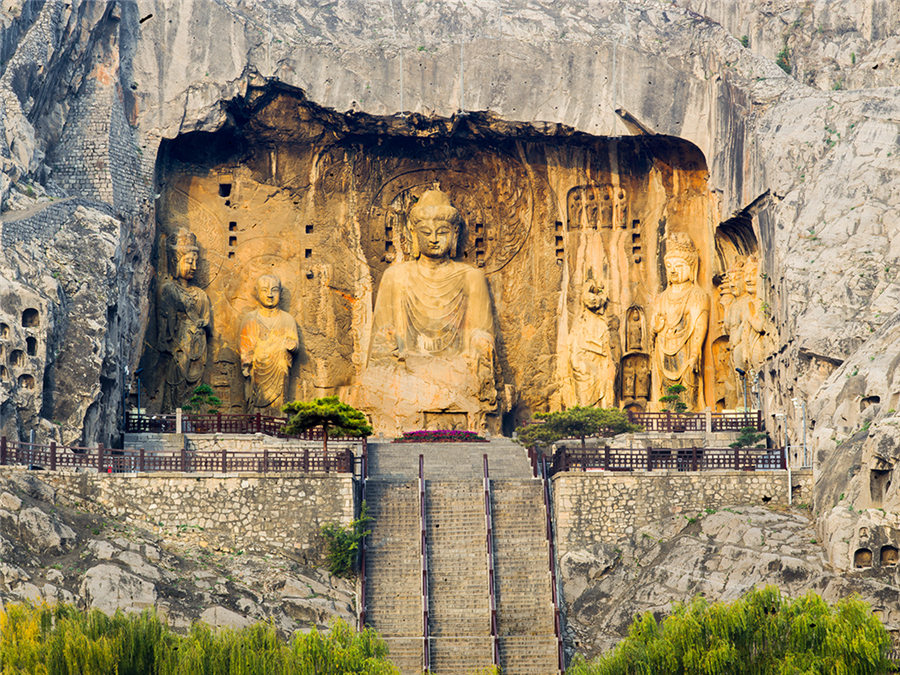
The Longmen Grottoes, located 13 kilometers south of Luoyang in Henan province, China, stand as a remarkable testament to the cultural and artistic achievements of ancient China. These grottoes, nestled along the east and west cliffs of the Yishui River, stretch for approximately one kilometer, showcasing an awe-inspiring collection of Buddhist art and inscriptions. Work on the Longmen Grottoes began around the year 493, during the Northern Wei Dynasty (386-534), and continued for several centuries. This site holds an exceptional collection of more than 2,300 caves and niches, containing over 100,000 statues and carvings of Buddha, Bodhisattvas, and Arhats, along with 2,840 inscribed stone tablets and more than 60 stone stupas. Among these, the most representative caves include Guyang Cave, Binyang Cave, The Lotus Cave of Northern Wei, Qianxi Temple, Cave of Ten Thousand Buddhas, Fengxian Temple, and Kanjing Temple.
The Longmen Grottoes are celebrated not only for their artistic grandeur but also for their embodiment of the cultural zenith of the Tang Dynasty (618-907). They provide invaluable insights into various aspects of life in ancient China, including religion, painting, calligraphy, music, costumes, medicine, and even foreign relations. The site holds a wealth of historical data that aids the study of Chinese sculpture, calligraphy, and religious practices. Recognized for its cultural significance, the Longmen Grottoes were inscribed on the UNESCO World Heritage list on November 30, 2000.
History
The history of the Longmen Grottoes is a rich tapestry of religious and artistic endeavors that spanned several centuries. The construction of these grottoes began in 493 when the Northern Wei Dynasty moved its capital from Datong in Shanxi province to Luoyang. This relocation brought with it the royal tradition of carving Buddhist grottoes, marking the beginning of an era characterized by intensive artistic activity along the cliffs of the Yishui River. The most intense period of carving occurred from the end of the 5th century to the mid-8th century, resulting in the creation of over 100,000 Buddhist carvings across more than 2,300 caves.
The grottoes serve as a chronicle of the artistic evolution that unfolded from the late Northern Wei Dynasty to the Tang Dynasty. During this time, sculptors and artisans not only adhered to the Buddhist doctrines introduced from India but also imbued the sculptures with distinct Chinese characteristics. This synthesis of cultures is evident in the intricate design of the statues, the detailed depiction of clothing, and the expressive facial features that reflect the artistic prowess of the time.
Throughout its history, the Longmen Grottoes have witnessed significant events and transformations. One of the notable inscriptions at the site is the Zhu Suiliang Inscription, created in 641 in honor of the mother of Emperor Taizong's fourth son, Li Tai. Additionally, the site has faced challenges such as weathering and looting, with many statues being illegally removed and dispersed across the globe during the early 20th century.
Art and Architecture
The Longmen Grottoes stand as an unparalleled example of the fusion of religious art with secular elements, showcasing the pinnacle of Chinese grotto art. The sculptures, primarily carved from limestone, exhibit a unique blend of Buddhist grandeur and intricate detail, with influences that trace their origins to India yet bear the unmistakable mark of Chinese artistry. The transition in artistic style is notably evident in the statues found in the Binyang Cave, which demonstrate a shift from the simpler forms seen in the Yungang Grottoes of Datong to the more vigorous and realistic depictions of the Tang Dynasty.
The architectural layout of the grottoes is meticulously planned, with statues and carvings that emphasize distinct personalities and expression. The statues range from serene representations of Sakyamuni to the muscular depictions of Guardian Warriors. The sculptors employed advanced techniques to render these figures with lifelike detail, often exaggerating certain features to enhance perspective and expressiveness. An exemplary piece is the statue of Vairocana, standing at 17.14 meters in height, renowned as a masterpiece of Buddhist sculpture.
Calligraphy also plays a significant role in the artistic narrative of the Longmen Grottoes. The site is home to numerous inscribed stone tablets, such as the Twenty Gems of Longmen Calligraphy, which are celebrated as rare treasures of Chinese calligraphy. These inscriptions, predominantly in the Wei epigraphic style, highlight the evolution of calligraphic art, characterized by vigorous strokes and a compact texture that suggest latent energy and dynamism.
Religious Significance
The Longmen Grottoes are not merely a collection of artistic marvels; they are also a profound repository of religious significance. The grottoes reflect the spread and adaptation of Buddhism in China, capturing the religious fervor and devotion that characterized the period from the Northern Wei to the Tang Dynasty. The statues and inscriptions offer insights into the religious doctrines and practices that shaped Chinese society during these eras.
Buddhism played a crucial role in the cultural and spiritual life of ancient China, and the Longmen Grottoes serve as a testament to its influence. The site features statues of revered Buddhist figures, including Sakyamuni, Kasyapa, Ananda, and Guardian Warriors, each embodying different aspects of Buddhist teachings. The presence of Bodhisattvas and Arhats further emphasizes the diversity of Buddhist beliefs represented in the carvings.
The religious significance of the grottoes extends beyond their artistic depictions. The inscriptions and calligraphy found throughout the site provide a glimpse into the spiritual and philosophical tenets of Buddhism, serving as a guide for worshippers and pilgrims who visited the grottoes over the centuries. The site's enduring religious importance is also reflected in its continued reverence and the efforts undertaken to preserve its legacy.
Preservation and Restoration
Preserving the Longmen Grottoes is an ongoing challenge, given the natural and human-induced threats that the site faces. The conservation efforts are a testament to the commitment of dedicated individuals who strive to protect these cultural treasures from the ravages of time. The restoration of the grottoes involves a delicate balance between employing modern technology and maintaining traditional craftsmanship.
The Longmen Grottoes Research Academy plays a pivotal role in the conservation and restoration of the site. Advanced techniques, such as ground-penetrating radar, 3D scanning, and infrared-thermal imaging, are utilized to assess the structural integrity of the grottoes and formulate restoration plans. These methods aid in tackling issues such as water seepage and rock instability, which pose significant threats to the preservation of the sculptures. Despite the advancements in restoration technology, the human touch remains indispensable in preserving the intricate details of the carvings.
The ongoing restoration projects aim not only to slow down the deterioration of the grottoes but also to create a platform for academic research and public engagement. The involvement of tourists and the application of digital technologies, such as virtual rehabilitation and 3D printing, are integral to ensuring the long-term preservation and appreciation of the Longmen Grottoes.
Cultural Influence and Legacy
The Longmen Grottoes have left an indelible mark on Chinese culture and the broader world, serving as a beacon of artistic and religious achievement. The grottoes are a testament to the creative genius of ancient Chinese artisans and their ability to synthesize and transform foreign cultural influences into something uniquely Chinese. The legacy of the Longmen Grottoes is reflected in their contribution to the fields of art, calligraphy, and architecture, inspiring generations of artists and scholars.
The cultural heritage embodied by the Longmen Grottoes extends beyond their sculptural and calligraphic achievements. The site offers a window into the social and cultural dynamics of ancient China, providing insights into the interplay between religion, art, and society. The grottoes are a rich source of information on the artistic, spiritual, and cultural evolution that occurred during the Northern Wei to Tang Dynasty periods.
In recent years, the digital preservation of the Longmen Grottoes has become a focal point for ensuring their legacy endures. The digitization of the grottoes allows for the virtual reunification of dispersed relics and the creation of detailed databases for future study and appreciation. This digital approach also offers innovative ways to engage with the public, fostering a deeper understanding and appreciation of the site's cultural significance.
The enduring cultural influence of the Longmen Grottoes is further evidenced by their recognition as a UNESCO World Heritage Site and their continued appeal to scholars, artists, and tourists from around the globe. The grottoes' legacy is a testament to the enduring power of art and culture to transcend time and space, connecting past, present, and future generations.
Tourism and Visitor Information
The Longmen Grottoes are a major tourist attraction in Henan province, drawing visitors from around the world who are eager to explore this UNESCO World Heritage Site. The site offers a unique blend of historical, cultural, and artistic experiences, making it a must-visit destination for those interested in the rich heritage of ancient China.
To enhance the visitor experience, the Longmen Grottoes Cultural Heritage Park has implemented innovative technologies as part of its "Internet+Longmen" action plan. This initiative, launched in 2015, leverages big data, artificial intelligence, and cloud computing to create an internet-based travel experience within the park. Visitors can enjoy features such as face-scanning entry, cash-free transactions, and a 3D street view map through WeChat. Personalized tour recommendations are also available, enhancing the overall visitor experience.
In terms of visitor facilities, the Longmen Grottoes offer a range of services to ensure a comfortable and informative visit. The park provides guided tours, educational programs, and interpretive signage to help visitors understand the historical and cultural context of the site. Additionally, the use of modern technology allows for real-time monitoring of visitor numbers and the implementation of emergency plans during peak periods.
For those planning a visit, the Longmen Grottoes are located at Luolong district, Luoyang, Henan province. The site is accessible by public transportation, with options for guided tours and self-exploration available. Visitors are encouraged to engage with the site's rich history and artistic legacy, taking the time to appreciate the intricate details and cultural significance of the grottoes.








